

When La Cholita accepted a Sassy Lassy award at the Burlesque Hall of Fame Weekender in June, the emotional significance was obvious. The recognition came after a career that began when, in her words, most people and venues in Los Angeles “had no idea what the hell burlesque was.”
La Cholita, aka Natasha Estrada, grew up in Northeast Los Angeles among “the cholos and cholas” of her neighbourhood, with a grandfather who was a member of ALPINE during “the flashpoint” of the 1943 Zoot Suit riots. She has headlined international tours, and her acts include a haunting La Llorona, performed by walking through the audience, singing the song made famous by Chavela Vargas.
“I made my mark in burlesque by boldly representing my cultural identity and lived experience through my entire persona,” she explains, “and that was deliberate because there was no space for that at the time. I had to kick the doors in and create my own opportunities.”
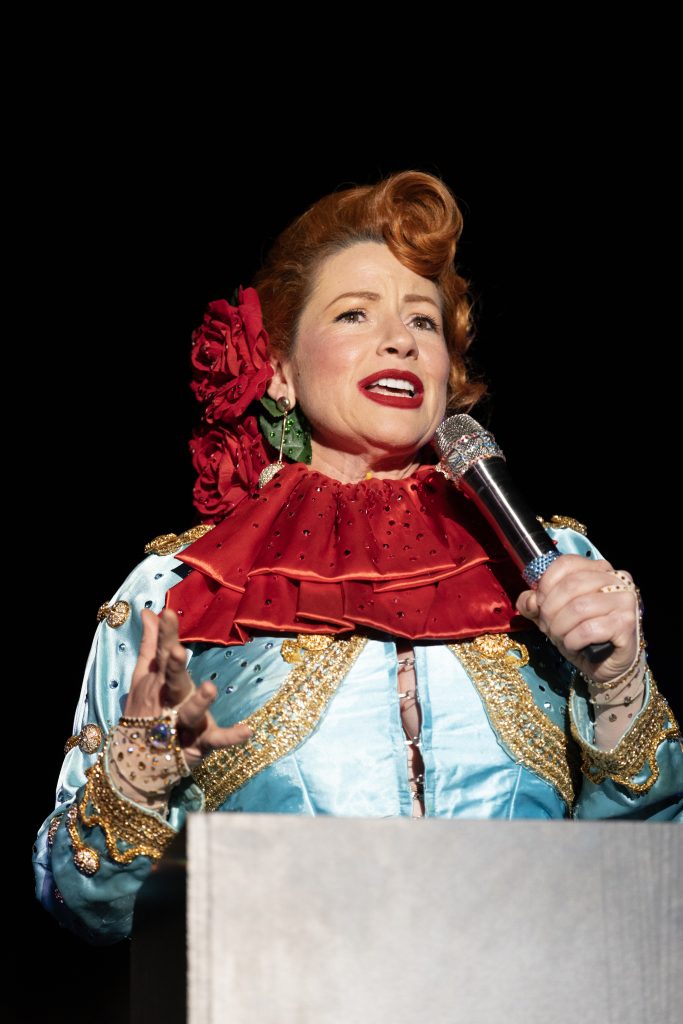
The recognition prompted a deeper dive. For Hispanic Heritage Month, which runs from 15 September to 15 October in the United States, La Cholita and fifteen peers across the generations of burlesque considered the same talking points on their lived experience in the industry.
Seven have been performing for fifteen years or more: Cleveland’s Bella Sin, born in Juárez; San Antonio’s Chola Magnolia, a Chicana of Mexican American heritage; Ginger Valentine, Los Angeles by way of Texas and “Tejana/Chicana/No Sabo”; Portland’s Lola Coquette, Yaqui and Mexican American; Long Beach’s Ruby Champagne; and, in Los Angeles, Tito Bonito, Cuban American, and Veronica Yune, Mexican American.
Four sit in the middle with ten to fourteen years: Egypt Blaque Knyle of Los Angeles, Dominican and Belizean; Brooklyn’s “Nuyorican Bombshell” Frankie Eleanor; Chicago’s Miss Nyxon, originally from El Paso; and Chicago’s Sio Bast, “a true Latin mutt.”
The other four have been performing seven years or fewer: Portland’s Bee Bee Sanchez, “Latine and Black – not Afro-Latine”; Santa Ana’s Lady Xtabay, a first-generation Mexican American; Arizona’s Sonia Rita, a folklorico dancer; and Long Beach’s Xochii de la Noche, of Afro-Indigenous Mexican and Salvadoran descent.
Many of these readily pay homage to La Cholita, “the person who truly showed me, as a plus-size Latina, that I could take up space,” says Bella Sin. Veronica, Xochii and Chola all name her as a seminal inspiration.
Words and Wounds

The first sticking point is the name. “I would personally love to see it called something other than ‘Hispanic’ Heritage Month,” says Ginger Valentine. For Egypt Blaque Knyle it carries “heavy Eurocentric and colonial roots,” and Lady Xtabay feels the same. “I find the name problematic, but it’s a start,” says Sio Bast.
Chola Magnolia holds both feelings at once. “While the term ‘Hispanic’ brings up some very difficult feelings, a conflict of sorts within my heart, this month is designated for us.”
Ruby Champagne agrees that “It’s a moment to turn up the volume and make our stories heard,” though Sonia Rita points out that “starting in the middle of a calendar month right now seems to really confuse folks.”
“How one person chooses to identify as is up to them,” says Lola, asking for respect either way. “I personally identify and honor both.”
Sombreros Not Required
Does their heritage feature in their acts, and if it doesn’t, is that deliberate? For Sonia the answer is “Always!” She grew up dancing folklorico, the only classes her nana would pay for, and even in a novelty act she can’t leave out her “latino moves.”
“I don’t think there has been a time I haven’t incorporated my heritage and culture in any art or activism,” Lola concurs. Her signature acts include ‘Brown Magic Woman’, and ‘Elle Mariachi’ which explores “the gender fluidity in ‘macho’ industry via playful and precise musicality.”

Lady Xtabay’s Selena tribute is “a culmination of what it means to be a Mexican-American woman.” She sourced the costume pieces from immigrant businesses in downtown Santa Ana, and buys flowers from a street vendor every time she performs it. Tito Bonito, ‘the Cuban Missile Crisis of Burlesque’, has several signature acts that showcase the “political commentary and theatrical fashion” of his Cuban heritage. In one of Bee Bee’s acts, set to Ricky Martin, she’s a “ceramic dancer napkin holder that I remembered coming out for special occasions.”
“I don’t deliberately make my acts about my heritage, but I don’t feel that my heritage needs to be the center in order to be present,” says Ginger, who embraces her roots in the kitchen. “Food is the soul of my heart and I’m incredibly passionate about preserving my ancestors’ recipes.” Whether or not an act is centered in her heritage, Miss Nyxon says “the way I move is rooted in dance styles learned as a child at every Quince, carne asada, or with my friends and cousins at the school dances and clubs.”

Chola Magnolia tried leaving it out. “I did not want to pigeonhole myself as a stereotypical Chicana,” she says, until “I realized that I was actually becoming complicit in whitewashing who I was, solely for the consumption of the masses.” Once she turned to cultural music, “more folks saw themselves in me as their representation.”
Egypt says leaving it out “isn’t a retreat from my identity; it is a deliberate statement of artistic freedom.” Latinx artists “should never be limited to performing only ‘culturally specific’ acts to be deemed authentic,” she adds, and have “the right to explore high glamour, avant-garde concepts, classic burlesque, storytelling, or pure theatrical drama without our cultural identity being questioned.”
“I don’t need to wear a sombrero or Mexican flag, or use Mariachi music to ‘represent’. Any time I step on stage I’m representing my culture and my ancestors,” La Cholita concurs.
Too Latine, Not Latine Enough
“The mind-blowing part to me, at that time, was the freedom to express my heritage!” says Ruby Champagne, who started twenty years ago. “I was told that I would only succeed if I focused on showcasing my Latinidad,” says Sio Bast, but “it felt as though I was being tokenized rather than celebrated.” Latinidad, she decided, is “being able to do whatever I want as an artist and as a Latina.”
“I wouldn’t say I discovered my identity through burlesque as much as I was forced to defend it,” Bella expands. “I was told I was too Latina, too foreign, that performing in Spanish or creating cultural acts wasn’t ‘burlesque’.”

For others, the work became a route back. Researching the pueblos of Xochii de la Noche’s grandparents in Mexico and El Salvador turned up “dances, traditional folk wear, music, and family stories.” Lady Xtabay’s stage name comes from a folk tale about a seductive forest dweller who lures men to their demise. “Anyone who isn’t a man loves it, while men squirm and ask why I would choose that as my pseudonym,” she laughs.
Miss Nyxon struggled with feelings of inadequacy in representing her people. “I’m a ‘no sabo’ kid,” she explains. “I never got to go see my family in Mexico; I grew up in Florida mainly, where I was not surrounded by kids of my own culture.” Burlesque, she affirms, “has been the vehicle that has slowly allowed me to accept myself, my upbringing, and that I do belong.”
Frankie Eleanor agrees that the policing of “people, culture and heritage” isn’t only external: “Even when the call is coming from inside the house, we have no right to measure one’s Latin/Hispanic-ness.” And Tito has learned that “the privileges we receive as Cubans sometimes stain the minds of people who have forgotten that all should have a safe place to migrate to here in the United States.”
Legends, Friends and Bloodlines
Selena is a common inspiration for the group, especially for Lady Xtabay, Xochii, Sio and Veronica. La Cholita grew up on vedettes like Lyn May, Olga Breeskin and Tongolele, alongside punk pioneers Alice Bag and The Plugz, admittedly “completely opposite sides of the spectrum, but I deeply identified with both.”
Kitten Natividad is a burlesque Legend with deeply personal connections here. Ruby, who calls her a friend, recalls Kitten yelling “That’s me! That was me!” watching her tribute act. Miss Nyxon appreciates that they were both “Mexican eldest daughters who grew up (for a time) in Chuco Town, 915, El Paso.” Lola, a friend of Kitten, Marinka and Rosy Mendoza, takes her style from Tongolele and La Zorita and their “flare of precise glamour and fierce defiance that honestly felt so punk rock.”

Bee Bee loved that Charo “was in on the joke of being the comedic caricature of a Latine bombshell.” Egypt says Tongolele and Iris Chacón “proved that a performer doesn’t have to shrink to fit traditional European aesthetic standards to be an absolute icon.” Sonia Rita points out that Rita Hayworth, born Margarita Cansino, “has a folklorico background, too.”
Beyond burlesque, Frankie’s inspiration is “the women of my bloodline.” Tito’s is John Leguizamo, who is “extremely political and vocal about defending the Latinx community.” Chola Magnolia has three icons: “Maria Felix, Dolores del Rio, and Chavela Vargas.”
Credit Where It’s Due
Ginger says few in the global scene know there is burlesque in Central and South America, “including festivals and shows,” and reminds us that “Burlesque history is not all Gypsy Rose Lee and Sherry Britton.” She points to Ficheraz on Instagram as “an incredible digital archive of Latine and Afro Cuban entertainers and history.”
“So many classic burlesque [performers] whether Golden Era or contemporary, use Latine Rhythms, instruments and influences,” says Bee Bee Sanchez. Egypt Blaque Knyle calls the “foundational role” Latin American, Caribbean and Afro-Indigenous traditions play in “modern, high-glamour theatrical tease” a contribution that “deserves far more universal recognition in burlesque history.” She insists that “our cultural traditions are not just stylistic accents; they are fundamental building blocks of expressive dance and tease.”

Frankie Eleanor started Butter Pecan Burlesque in 2017 “at a time where there was no platform for us to celebrate just being us.” Miss Nyxon nods to Bella Sin’s Ohio Burlesque Festival and the Burlesque Hall of Fame exhibit ‘Let’s Get Loud: The Heritage of Latin Burlesque‘ they co-curated. Ruby asks us to consider all the Latin “performers, producers, creators, costumers, photographers, hosts, and audience members helping build and shape the industry along the way.”
The Quota
Tito Bonito has happily played on tropes, from Rosalita in The Goonies to hosting a Star Wars burlesque show as “Juan Cholo”, and to him it has “always felt more like positive representation than tokenism.” Ruby, invited into all-Latin shows, says “you could call that being ‘tokenized’, but honestly, I’ve experienced it in a positive way,” though in general terms she asks, “Who gets paid fairly? Who gets recognized as a headliner? Is a Latinx performer being invited just to check a diversity box?” Lady Xtabay says “my experience so far has been positive, but I know that is because of those that came before me.”

Chola “cannot even begin to count how many times I have been tokenized on stages.” Producers said “they could not do a show in Texas without one Latina,” and after one show, when she walked offstage “nearly naked and vulnerable, comments and jokes about the wall between Texas and Mexico were shouted on the mic.” She never returned.
“White producers generally don’t book Latin acts unless it’s Cinco de Mayo,” says Xochii de la Noche, and there are “many more restrictions on what songs I could pick, how I needed to move, etc., versus my white counterparts.” Bella Sin insists “we are not here to be someone’s exotic costume,” and Egypt derides “specific tropicalized tropes, traditional salsa aesthetics, or spicy caricatures.”
La Cholita encountered issues pitching performers to Telemundo, Univision and LatinNation, where she was rarely featured herself because “they wanted more ‘traditional looking Latinas.'”

On the West Coast, says Xochii, “light skinned Latine are made more visible, so it can feel further isolating if you are darker skinned, afro-Latine or afro-descendent,” while Miss Nyxon was accused of being booked “because I am brown rather than the quality of my work.” At a 2020 panel, Frankie Eleanor asked Perle Noire about ‘passing’. “You need to stop using that word! We all do,” Noire cut in. “I am not blind to the privilege that I experience due to my lack of melanin,” Frankie maintains.
Bee Bee describes a limit from inside. “The No Sabo label can weigh heavy like an anchor … it makes me nervous to create a culturally specific act.”
Hearing Home and Feeling Seen
Performing to Rocío Durcal’s Gata Bajo La Lluvia, Lady Xtabay said an audience member “felt represented because it was a song they heard growing up.” “I look into an audience and see a Mexican person’s face light up because they hear Spanish,” says Bella Sin. At Sonia’s folklorico fusion performances, they get “teary eyed telling me about the Tia that danced, or the time they got to take a class and learn a dance, or watched performers at fiestas with their nanas.” Veronica Yune performs a number with a very personal backstory, and “although the audience may not understand the meaning in the lyrics, [she hopes] they feel it.”

“I felt embraced by audiences and crowds, but not always by my peers,” says La Cholita, but “any time I get a message or meet someone who says that my work inspired them is a moment I cherish deeply.”
Bee Bee finds performing at What The Funk Fest especially satisfying. “No one demands any one thing from me; I can be my full self there.” Tito Bonito treasures a follow from Celia Cruz’s official Instagram and a reply from Gloria Estefan.
Family Friction
Is there a sense of community among Latinx performers, I ask, and when or how do things tend to diverge? “It’s like working in a massive factory with hundreds of people and suddenly finding cousins in the crowd. La Familia!” says Sonia Rita.
Early in her career, La Cholita found that “some folks were quick to align and capitalize to advance their own agenda, but not to advance the movement as a whole, which was hurtful,” in part because of “the limited slots and opportunities that were offered to Latino performers, and the idea that there can only be one.” Bee Bee Sanchez calls it the Highlander Effect: “there can only be one of us succeeding at a time.” Frankie Eleanor puts it down to a “scarcity mindset” that “still plagues a majority of us, which creates tension at times.”

Miss Nyxon agrees that “things can feel competitive,” and says it’s “traditionally very patriarchal and machismo – women are pitted against each other in those spaces,” but believes “we can break toxic cycles that have been engrained in us since we were young, and make things better for the new generation.” Lola Coquette reminds us that “the ‘culture’ of Latine and/or Hispanic folks is not a monolithic experience,” and Xochii de la Noche highlights “the reality of how prevalent anti-Blackness still is in all Latine spaces, both in and out of burlesque.”

“In my opinion, the politics within this industry have often proven to be stronger than the sense of community,” Sio Bast remarks. Veronica Yune sees the other side: “There can never be enough representation, but I think LA has strong artists who bring that representation into the scene, and we celebrate each other.” Tito Bonito says Latin performers are “such a small minority within the burlesque community, but the more people find out about it and see themselves represented, the more they fall in love with it and can join if they choose.”
Working in Fear
For Bella Sin, “our biggest concern is not stage disputes, it is immigration safety. Some performers are afraid to go to work, afraid to travel to a show, and afraid that simply being visible and proud could put them at risk of being detained by ICE.”

After the ICE raids began, says Lady Xtabay, performers checked in on each other, offered support and “loudly displayed our culture to show our strength and resilience.” Chola Magnolia lives with “the very real fear of the daily potential for my family and friends to face deportation.” Xochii de la Noche says the community isn’t unanimous on this threat, and that “conservative Latine – even those apathetic or in support of ICE – can exist and still exist.”
Last Orders
The group have some considered final thoughts for their peers and fans. Xochii reminds her US colleagues that “we see when you use Latine imagery, songs, and inspiration but are silent to our struggles.” Bella Sin asks that they “hire us, center us, and stand with us when our communities are hurting.”

“There’s a real person behind all the rhinestones you see on stage,” says Ruby, for whom being a middle-aged performer “has required me to redefine confidence and success for myself.” Chola was raised in “a very machismo, male centered environment,” and says “it has taken me a very long time to firmly plant my feet and allow others to see and hear me.” Miss Nyxon declares: “You are worthy to pursue your dreams right now. Not when you are perfect, or a certain weight (fuck that noise).”
Lola Coquette grew up in a Mexican-American border town and understands “living in dualities before coming out as queer or as a burlesque performer, and later on as two-spirit.” She found her limit in being constantly reachable online as a public figure, unable to “show up authentically when this access is demanded of us 24/7.” Stepping back is, for her, both an act of defiance and a healthy mental and spiritual balance.

Sonia Rita’s message is for producers: “I don’t want to bring a full heavy tuba mariachi song to a classic jazz club, but maybe the audience would love a different song version!”
The Torch
Asked which Latinx contribution to burlesque everyone should know about, La Cholita looks forward rather than back. “Right now, I am most excited about the new generation emerging to carry the torch forward. I see so many power players on the rise and it’s thrilling – artists who are embracing their authenticity unapologetically. They are challenging beauty standards, gender norms and stereotypes, while building their own distinct legacy in the art form.”

As Hispanic Heritage Month 2026 comes to a close, Egypt has the last word. “Beyond the name, the true importance of any cultural observance lies in going beyond corporate symbolism or seasonal spotlighting. It shouldn’t just be a 30-day highlight reel where performers are booked to fill a quota, only for opportunities to taper off the rest of the year. It needs to be a year-round catalyst for genuine equity, fair compensation, sustained programming, and deep respect for our lived experiences 365 days a year,” she insists. “The ultimate message is simple: celebrate us fully, compensate us fairly, honor our complete Afro-descendant heritage without asking us to pick a side, and respect our impact every single day.”
Turn Up the Volume: Latinx Burlesque Beyond Hispanic Heritage Month edited by Holli Mae Johnson, with grateful thanks to all contributors.