

After three sumptuous hours on the phone with one of the most compelling voices in contemporary burlesque, I can safely say that nothing frightens Foxy Lexxi Brown. Well, almost nothing. Even this titan of tease quails at the sight of her inlaws front row at a show.
“Oh lord, they were too close. I hate it when they’re up front, right there! I’m like, nooo – now I can’t open my legs – I can’t touch the puss! But – welcome to my world I guess.”
Being in Lexxi’s orbit feels like a reverent and irreverent experience. Born and raised in Montreal with Haitian roots, she has a singular alchemy of regality and accessibility – poised and profane, enigmatic and earthy all at once. Self-aware, grounded, but with an enviable confidence and sense of divine purpose that was built – not born, brick by caustic brick.
“I was the shyest girl,” she begins. “I didn’t even want to wear hats or sunglasses because I didn’t want people to say, ‘Who she think she is?’ But I loved to dance. I loved the stage. And I was dreaming about being… everything that people said I can’t be.
“You can’t be a model – you’re too thick, you’re too dark. You can’t do this because your nose is too wide. There was always a barrier. And even guys would tell me, ‘Oh my god, you’re so cool, I love your personality, but I don’t date Black girls.’ And that was really hurtful for a long time.
“All this told me it’s not glamorous to be Black, but I wanted it to be. I loved beautiful things – like the pinup era of the past, but I had people around me saying, ‘ Why are you doing this retro white shit? You’re not Black enough.’ It seemed like there was nowhere or noone I was allowed to be, and it was overwhelming.
“High school was really a hard time. I really… I almost… I almost unalived myself. It was too hard for me. And gladly it didn’t work, because I’m still here.”
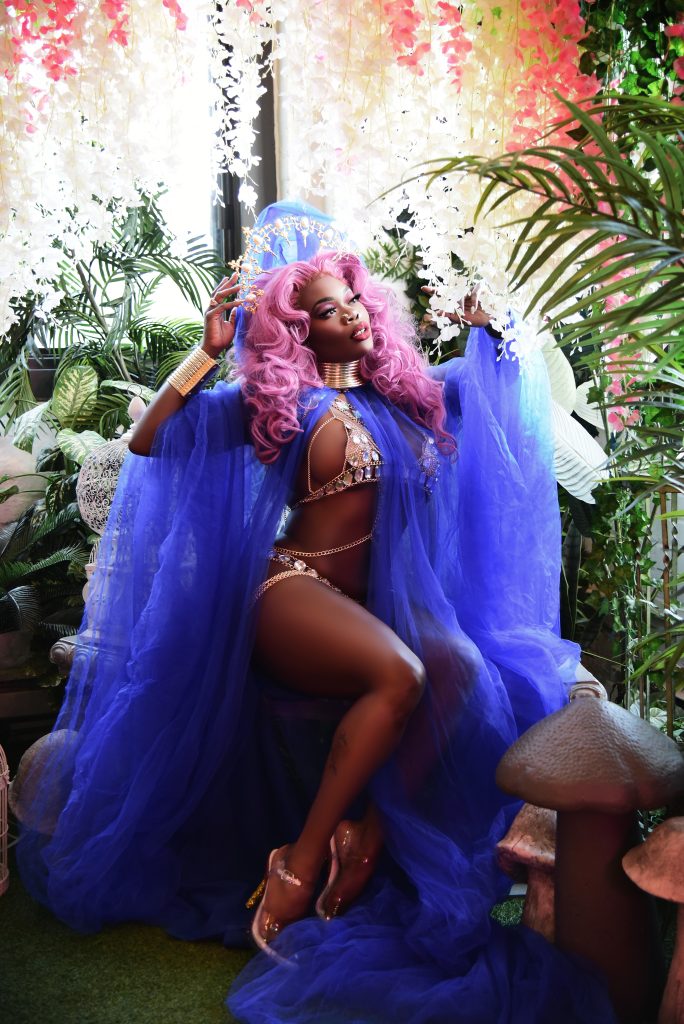
Thankfully, Lexxi’s mother was an ardent supporter.
“She knew I loved modelling, theatre, improv and comedy. She bought me my first luggage set. I thought if my mom believes in it, maybe I can make it work.”
What does mom think of her burlesque career?
“She loves it; she’s my number one fan. She keeps asking me to send pictures. When we got back from BHoF, my fiancé brought the trophy to my mom so she could see it in person. I cried; my mom was bawling, too. She’d been told her cancer was back and she didn’t want to tell me when I was at BHoF. She said, ‘That was one of your biggest moments. I didn’t want you to worry about me.’ That’s a mom that really cares about my dreams. It deeply touched me.”
Lexxi has a 17 year old daughter herself, as it turns out.
“It wasn’t planned, but I made a decision to have her. And I lost myself in the process, who I was and who I wanted to be. But burlesque let me take time for myself as a woman, and remember that my baby and I are separate people. When she’s gonna have her life, I still need to be someone.”
“It really helped me stay grounded, though; I could have lost myself being a little rock star too young. I couldn’t go party hard on weekends and get hammered, take drugs and all this shit to stay awake. I had to be home to feed my baby, wake her up for school, be at the teachers’ meetings. I had to be a mom. And a single mom at that.
“Even when I was travelling and I came back with a crown, I would give it to her so she could see why mama wasn’t there, and I think she understood. Now she’s super proud, and she loves to dance herself.”
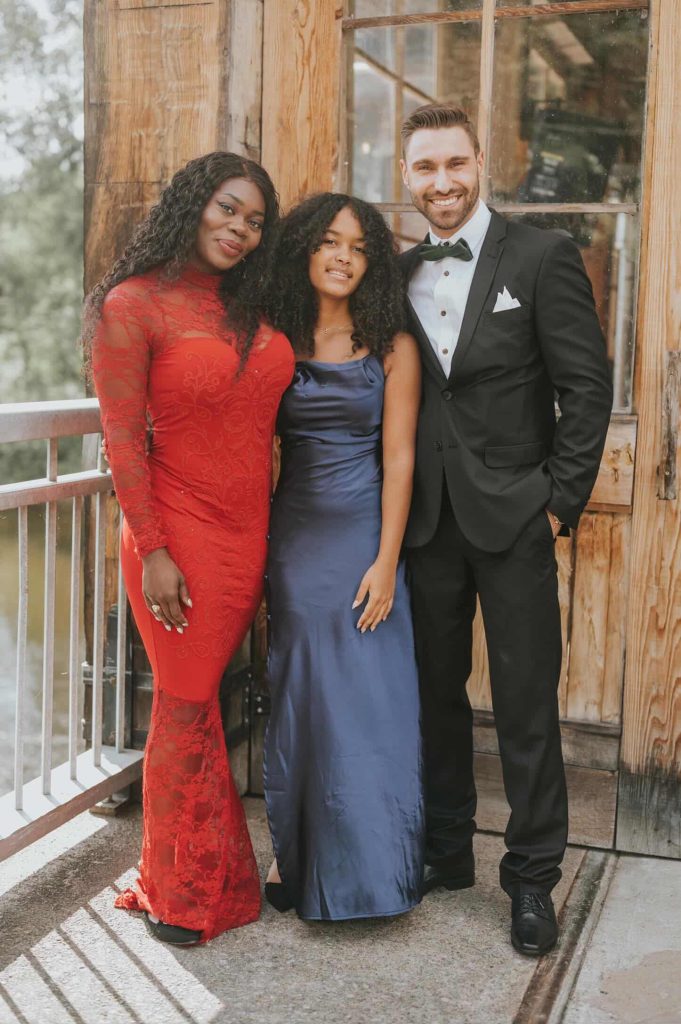
In reality, the pinup model fantasy that a younger Lexxi aspired to gave way to success in the fetish scene.
“It was hard for me to understand my character in pinup,” she admits. “It’s elegant, it’s sexy. But I don’t want to be the ‘perfect woman/wife’. That’s not me. I want to be a good person, but I don’t want to be the passive femme waiting at home. I realised people responded to a natural dominant energy in me.”
Does she think she was rejecting a broader, patriarchal expectation?
“Oh one hundred percent. Women are supposed to be small and accommodating. And with Black women it becomes: you’re not humble enough. We’re not allowed to be delicate, but also given the ‘angry Black woman’ stereotype. They want to shame you – police you – because they can’t control you.”
So it’s a mix of ‘a place you can belong’ and where you’re allowed to belong, I pose?
“Yes, a mix of both. Because in the fetish world, submissive men knelt in front of a Black woman is more powerful in their fantasy, given the history of things. And at the same time, it helped me to see that whatever people told me when I was younger, I am beautiful. I am worth everything. And I have men paying me just to look at me, to lick my boots. I’m running the show here. It’s not about you.”
When Lexxi saw burlesque for the first time, at an erotic trade show, it was a revelation.
“My friend at the fetish corner rushed over from the stage area and said, ‘You need to see this! There’s this girl, she’s gorgeous, you’re gonna fall in love.’”
‘This girl’, as it turned out, was Roxi D’Lite.
“I was shaken to the soul,” Lexxi breathes. “Her presence, the aura, her smile, how regal she looked on stage. People were just drooling! And she’s curvy – we have a similar shape.”
The epiphany was immediate and definitive.
“I thought, oh my god, this is what I want to do. I don’t know what it is, but this is IT. I walked up to someone close to her booth and said, ‘I want to do this. How can I do this?’ So they led me to Frank Mondeose. He gave me my first chances. I learned a lot.”
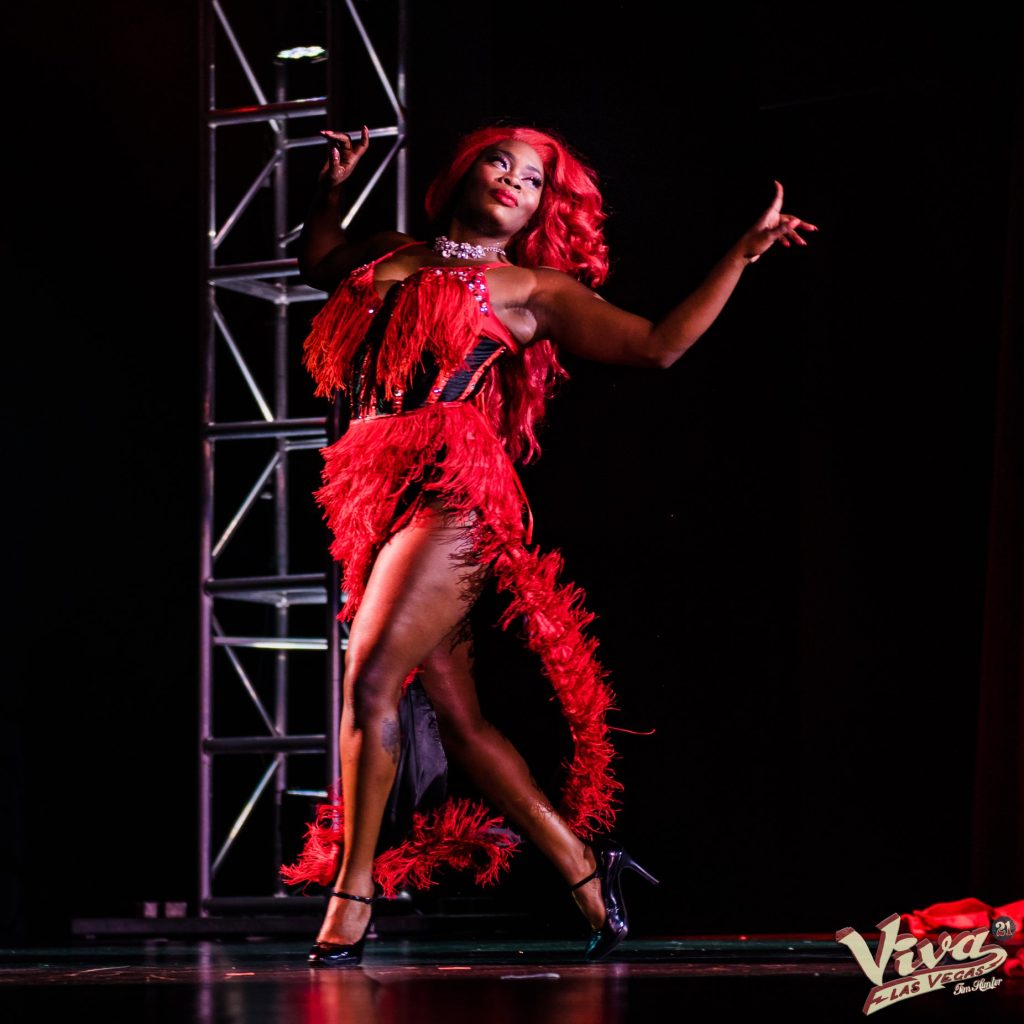
In 2012, Lexxi learned the ropes as a stage kitten, and drove six hour round-trips for one hour classes with Lady Josephine at Arabesque Burlesque. As months passed, she found her long-held beliefs and aspirations were ripe for realisation in burlesque.
“I wanted to prove that Black women can be glamorous, elegant, polished, and all of the things that people seem to feel are only reserved for white women,” Lexxi affirms. “And the confidence that I gained during those years – competing, travelling, growing and changing my perspective – just flourished.
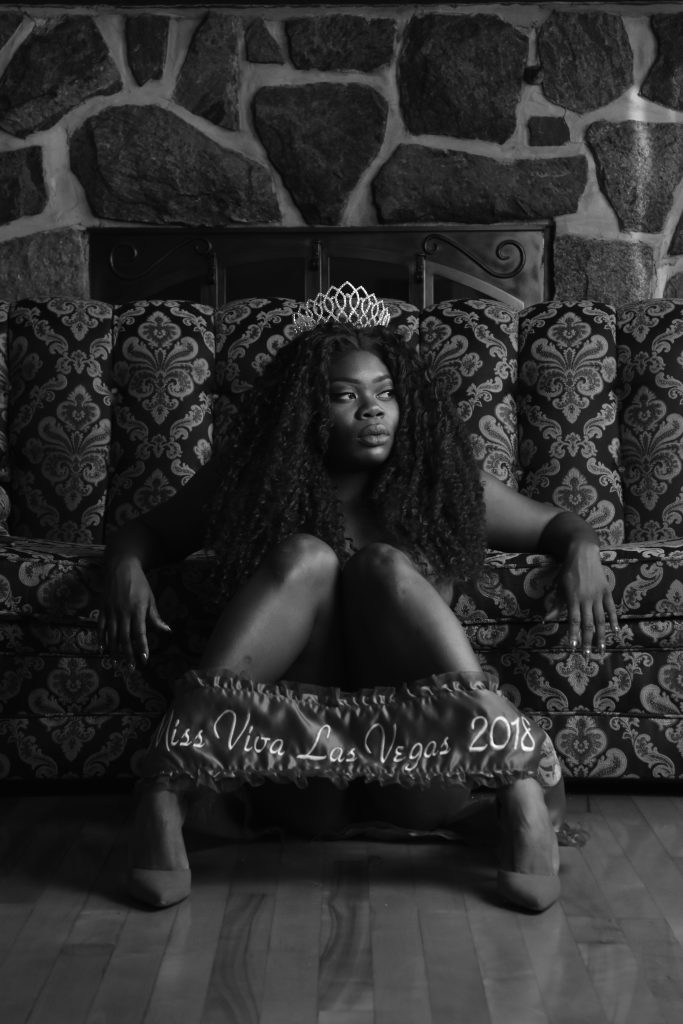
“Eventually I did my first competition at Miss Viva Las Vegas in 2018. It went well.”
To put it less humbly, Lexxi won. With her first act, no less – the When You’re Good to Mama routine she’s still well known for.
“I was surprised, because this act is so simple. People were doing tricks and backflips and splits, and I’m just there shaking my titties and having fun. But people say this act just feels so me. It’s a bit silly, but not too much – the perfect act for someone that’s never seen burlesque before, as well as lovers of classic burlesque.”
Historically, a lot of Black burlesque performers have said they didn’t (or still don’t) feel welcome or represented in the Neo-classic genre. And yet we’ve had an endless parade of Black title-holders in recent years. Does that excite her?
“That’s exactly what I wanted,” Lexxi nods. “It’s a full takeover. Because if we did all that work and you don’t take the space, we’re going to lose it. And I say ‘we’, but I’m just a small piece of this – there were giants before me, of course. When Black performers see others succeed, they think: I can do that too. And they try it, realise they love it, and go all in.
“I see myself as one of the warriors,” she continues. “I want to be the one who’s gonna knock shit down, because I have the energy for it – the balls for it, you know? Few people do because it’s a lot to carry. You’re the first one to get hit.”
We discuss Lexxi’s body of work to date and the incorporation of fetishistic elements and forays into drag and ballroom, along with comedy and storytelling. Proactive exposure to a range of artforms has undoubtedly given her atypical creative range and conviction, and with it a distinctive personal brand – even in her playful social media content. I know that’s something many performers out there are trying to cultivate in this climate…
“When you look at a performer or a person and you feel something – it’s not what they’re doing but how they feel about themselves. Confident and grounded in who they are. That’s what you’re feeling. And people try to replicate that, but you just can’t.
“I love to do fun things, dress up and take pictures, and it’s carried through in all the types of performance I do. So it’s not gonna look weird. I’m in a place now where I can do pretty much what I want and people are going to understand it. Like ‘Queendom’. If you had told me I’d do this five years ago, I would never have conceived of a burlesque act like this.”
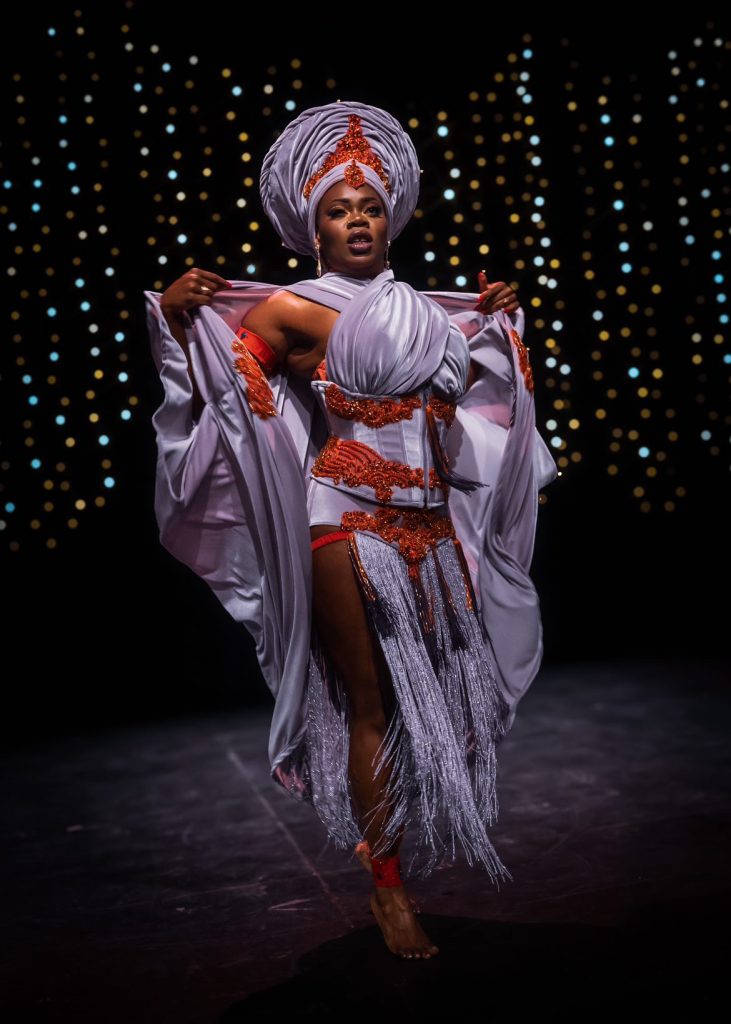
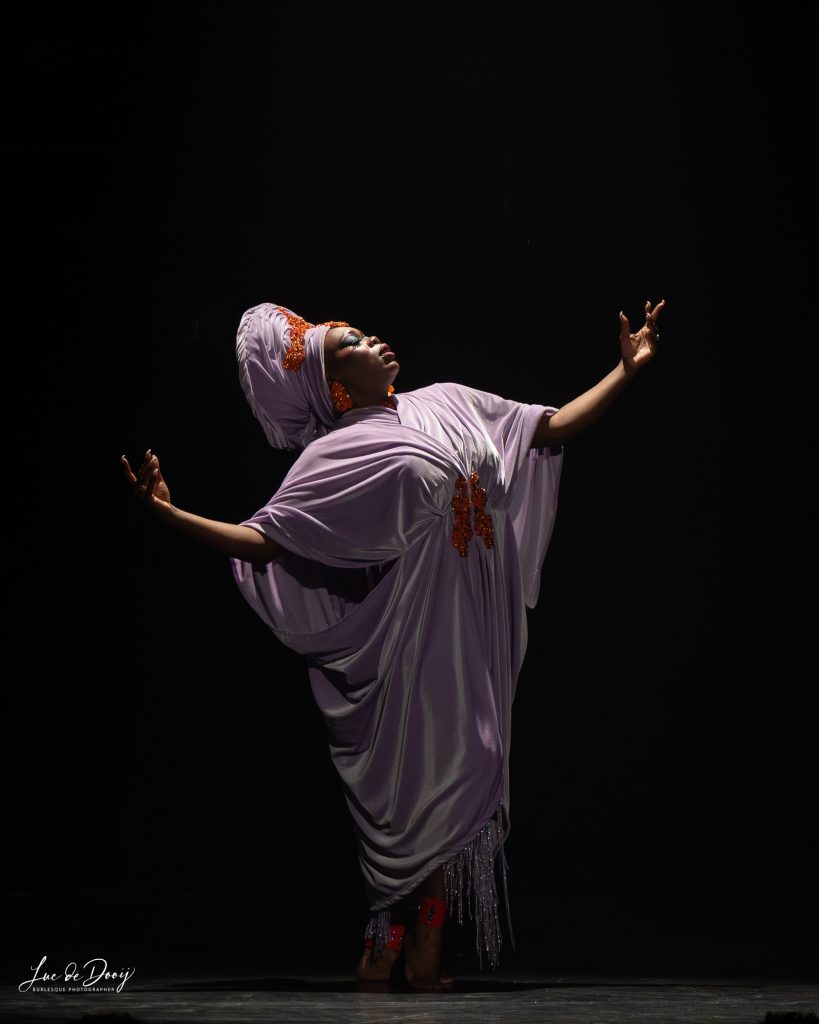
‘Queendom’ – awarded Miss Exotic World 1st Runner Up at the Burlesque Hall of Fame Weekender 2025, is a remarkable achievement that earned immediate entry into the Burlesque canon, to be studied and celebrated indefinitely. But the details of its conception are equally insightful.
Foxy Lexxi Brown performs Queendom at the Burlesque Hall of Fame Weekend Tournament of Tease 2025, winning 1st Runner Up.
“It wasn’t an act at first,” Lexxi explains. “I had to do a Beyoncé act for a show, so I asked my designer to build something really quick. I had the skirt with the fringe, the bra, but that was it. I picked the Beyoncé song COZY, and at one point she declares, ‘I’m Black … comfortable in my skin’. So I decided not to wear my usual luxurious hair, just my real, short, masculine-ish hair, because I have really broad, wide shoulders people made fun of at school and I always had long hair to hide them. I wanted to expose my back because I’m proud of it now.
“So I did the show – all improv really, and one of my friends recorded it. When I posted it I got a flurry of messages from peers saying, ‘Babe, I need to see this,’ and ‘Why are you not applying with this?!’
“Then, during the pandemic I heard this song – the Jumanji song, and it really made me move. I’d been thinking about using Strange Fruit for something but it just felt too deep, you know? But if Jumanji came in… You know when you have an idea? I just threw my phone, like, stop – this is so good.
“I first performed it for Juneteenth with friends in the audience, and just let myself go and followed the music, knowing if it’s shit they’re gonna applaud and love it anyway. Then I toured with it, and every time I tried a move that went well, I kept it in.”
There were accidents, too.
“I invented the move where I roll the long fabric around my arms because I forgot half of my costume at home at a festival! I had no choice but to find something else to do and it became a real moment. I was also supposed to have a bra underneath when I removed the fabric, but the bra kept coming undone every time I performed. Célesta O’Lee and I were reflecting and eventually she said, ‘You don’t even need it. Try it without.’ My ancestors didn’t wear any fucking bras, so it made total sense.”
I observe that proudly displaying her back takes on additional meaning when you detect the clink of chains and whip cracks incorporated into the Strange Fruit opening.
“Absolutely. I really wanted to put everything into it, everything done to us and everything we were told – every stereotype. Even the Jumanji lyric ‘swinging in the trees like a monkey’ – all those raw references.”
Is it a demanding act to perform?
“I really enjoy performing it and I love the reaction. The first part can be really hard for me, though; the last time I performed it I was crying during tech. It hits harder sometimes because I feel the words, and what’s happening in the world can make it heavier.
“But ultimately, this is our trauma and we’re not gonna sit in it. We’re gonna own it and thrive with it. That’s why there are two parts to this act. I want to send a message, but after that – let’s lift it. People don’t really listen when they feel like they’re being screamed at for four minutes, and an act that made me cry from beginning to end would be too much for me, too. You need catharsis.”
Does she encounter awkwardness or discomfort from white peers or audience members who want to discuss and appreciate it?
“I can see when someone is genuine, and it’s okay – you can enjoy something even if it’s not part of your culture or story. I appreciate that they understood it and are trying to be mindful of how they communicate.”
When the act was accepted into the Exotic World category last year, Lexxi readily believed in advance that it wouldn’t win in this particular arena.
“I knew I would smash that act and I wanted to make a statement. That was it. There’s a chance, but I didn’t think it was going to win. And when Jessabelle Thunder won – like, of course. She’s been doing this for so long, so impeccably, and it felt like that was her moment. Losing to her was perfect for me. No one else. Only Jess.
“This act wasn’t planned. And yet it was there to be born,” Lexxi concludes. “I just went with it. That’s why I went into drag, ballroom, different kinds of styles just to really find who I want to be – in and outside of burlesque, and keep that curiosity.”
I’m interested in the particular appeal of drag for Lexxi, and her experience as a cis woman in the artform.
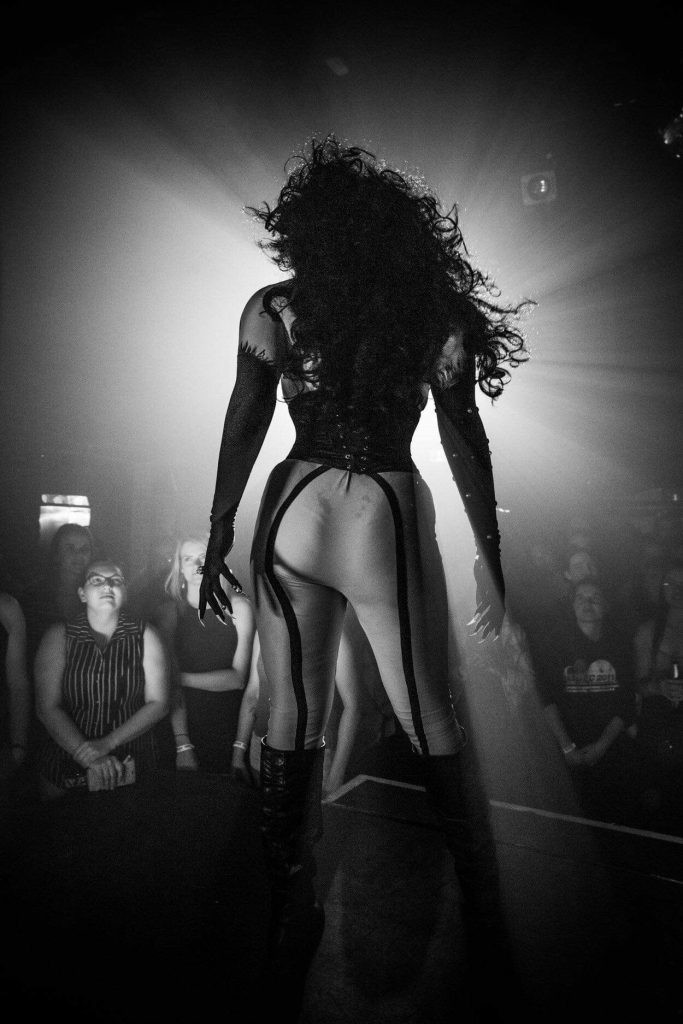
“Drag as a woman is totally different,” she confirms. “A gay club I performed at didn’t want burlesque because ‘why would the gays want to see a girl be naked?’ So the drag performers asked me to perform without telling the owner. We did it from the back door – they didn’t present me, just opened the curtains and on I went. The crowd went wild. Whatever I do in that space, people love the energy.
“I had a gig with a full ballroom house and got tipped $800 just for performing! Crazy, right? And then I started competing, won my first one and just kept going.
“Ballroom is challenging, though,” she qualifies. “If you want to get humbled, go into ballroom, because they will read you to filth.”
Perhaps all burlesque performers should have a mandatory crash course, I muse.
“Honestly, it’s survival training,” she laughs. “I learned how to look at myself in the mirror and understand what I’m selling. Am I selling my thighs? My ass? My waist? My face? My arms? My back? That’s something I love to teach. You think people are looking at the parts you don’t like, but if you’ve learned to love it and showcase it, you don’t care what people think any more. Everybody can win if they learn this.”
At a time when the industry continues to ruminate on regulation, survival, and commanding due respect and compensation, how does Lexxi see and attempt to solve these issues?
“We need to play the game – It’s sad, but also true. And if you want to sell tickets, the biggest rule is quality. Nobody can deny quality. If you have that, you can do whatever the fuck you want. It doesn’t matter who the performer is – size, colour, and so on – it’s about the overall visual impact. A standard of presentation. You can’t expect people to treat burlesque seriously if we’re not treating it seriously.
“I sell my work like it’s the highest thing you could experience,” she elaborates. “Because what people are buying is the experience. Aesthetics are really important – the poster, the phrasing, the name of the event – it all matters. We need to make it compelling and you have to be good – if you’re a POC, really good. That’s the reality.”
As the producer and supporter of several productions past and present, including Mirage Burlesque Experience, Stock Cabaret, and working with Célesta O’Lee on Imperial Burlesque Canada, which factors are always going to come before monetary considerations for Lexxi?
“I’ve said no to big gigs because they have a reputation, say, for cultural appropriation for instance. I won’t work with people my morals do not align with. Early on I was hired for a large-scale production, which I eventually took the reins of, and I didn’t really vibe with the audience because no queer people were there. So I took the plunge and decided I’d rather build my own thing, so my friends and fans can be in a safe space I can’t guarantee with an audience I didn’t build. That’s how Mirage was born.
“Also, the overall experience for my cast. I can make a lot of money, but I don’t want to make it off people that didn’t enjoy it or should have been paid more. To that end, I also want to work with people who do have the money and sell them the idea that they need burlesque – that it’s going to be glamorous and their clientele will love it. That’s how we bring more work into the scene.
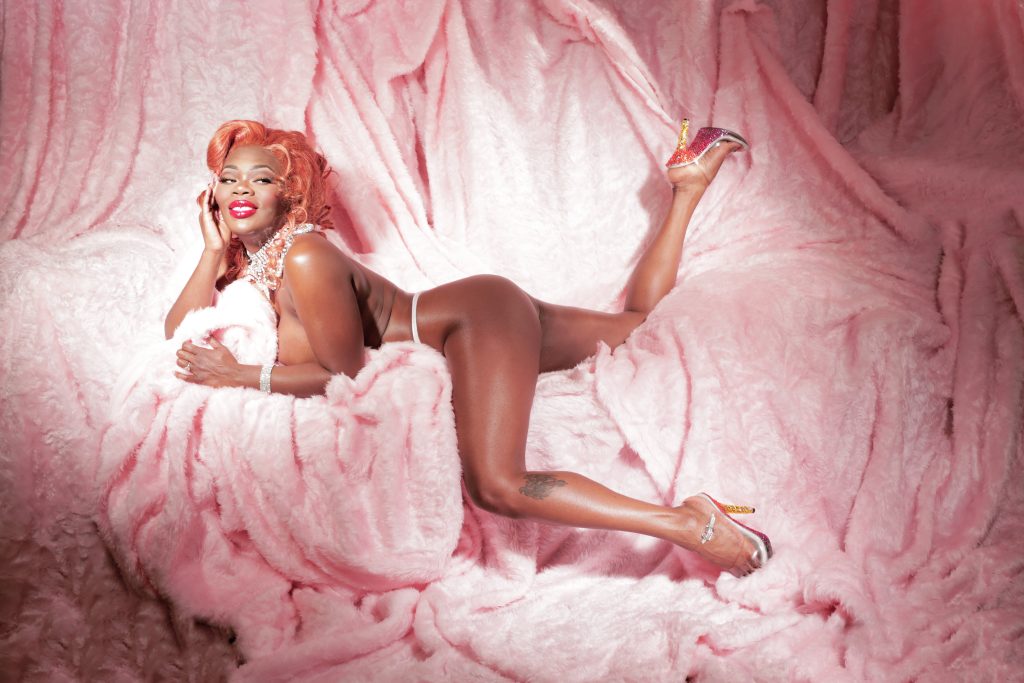
“I want burlesque performers to feel special. Respected. Like superstars. Because we don’t get that enough. I’m a headliner, so I do get the queen treatment now, but I know what it’s like not to have that.”
What would she say to performers aspiring to be headline features and work at that level?
“First I would ask them, what do you actually want, and are you willing to do what it takes? Because it might require things you don’t want to do, or becoming a different kind of person – making uncomfortable decisions. That requires reflection. You need to be strategic and smart.
“There are places I don’t go. There are people I don’t align with. Everything is a choice and everything has to be considered. It’s not about being fake, but I am careful how I present myself, how I respond online and whether I engage in drama – you’re never going to see me all over the internet. There are parties I don’t go to and situations I avoid because everything contributes to how you’re perceived.”
It’s a high maintenance aspiration, I nod.
“Yes. And exhausting. A lot of people say they want to be a headliner, but they don’t realise that it’s a job in itself. There’s the show, the after party, signings, talking to people, then another event, then a shoot, then workshops. It’s nonstop. I’m ‘on’ all weekend. People will say they’re tired and skip things, and I’m like – you asked how to be a headliner. You’re not ready. This is work.”
Social media can be a two sided coin in that respect, I suggest. Showing people what’s possible on the one hand, but often not in comprehensive detail.
“Exactly. I didn’t understand that at the start either. But you can see who gets booked again and again at that level – and who doesn’t. Some people stay in the same place, the eternal bridesmaid.
“The upside of living that way – being intentional and careful with your energy – is that it actually becomes freeing. Things get clearer. There’s less confusion.”
At 38 and 41 respectively, Lexxi and I agree that age and time can certainly lend that perspective.
“For real. We’re so lucky. I have a lot of vision. I always have projects. I’m at a point where I can say, ‘I want this’, and then two months later I have it. But the work I’ve done to get here…”
A pause. An exhale.
“Fourteen years of sacrifices – all the time away from home, and my daughter with someone else. All those doubts. But the doors that open, it’s crazy. The fruits come now.
“I think I have a calling – at least, people tell me that so often I’ve come to believe it. There are things that I have the energy – the shoulders – and the opportunity for, and I want to open doors for so many people before I’m out of this earth. I have the tools to make it work, so let’s go. Let’s fucking go.”
Foxy Lexxi Brown interviewed by Holli Mae Johnson. Visit foxylexxibrown.com and follow Lexxi on Instagram and TikTok.