

When I first started performing burlesque, I did not regard what I was doing as revolutionary. I know many performers understand the political magnitude of striptease right from the beginning, but I was mostly concerned with the seemingly tame aspects of learning how to build a full routine and tie my corset. It wasn’t until I began diving into the history of burlesque that I realized its full positive impact on the world, and my eyes have been wide open ever since.
Researching burlesque history has shown me that even in the often-trivialized, often-hidden world of striptease, there still remains a current of misogynoir that echoes what we fight against in mainstream society. When I first started reading our history, I had to scour multiple different sources to find more than a few Legends that looked like me. On my own, with my tired eyes poring over forgotten newspaper ads, I learned about Gertrude “Baby” Banks, Willa Mae Lane, Nikki O’Daniel, Mable Lee, and so many other Black burlesque stars of yesteryear. There are many modern burlesque history books and articles that entirely ignore the existence of Black performers, or they briefly mention Black performers in an offhand fashion as merely an ‘exotic other’ to White performers. Even when touting the hallmarks of feminism and blasting off hot-button phrases like ’empowerment’, ‘body positivity’, and ‘inclusion’, Black burlesque performers are sometimes still left isolated and othered within this very niche market.

So what do we do when we are not offered a seat at the burlesque table? We create our own tables. We talk to each other and make sacred spaces of belonging big enough to fit our own wants and needs as Black performers. Because we are Black, we sometimes understand each other’s struggles even if we are located miles – or even oceans – away from each other. Burlesque can be a lonely and competitive place for anyone, and being a marginalized performer of color can make it even lonelier.
Some call this a trauma bond, but the truth is more beautiful than that. This sense of belonging is built collaboratively through trust, responsibility, and labor. We become familiar and comforting to one another, even if these relationships are only cultivated online or a few times a year at burlesque festivals. Maybe we build something even deeper than a Black burlesque community; maybe we are like a family.
Wait… a Black burlesque family? In this economy?
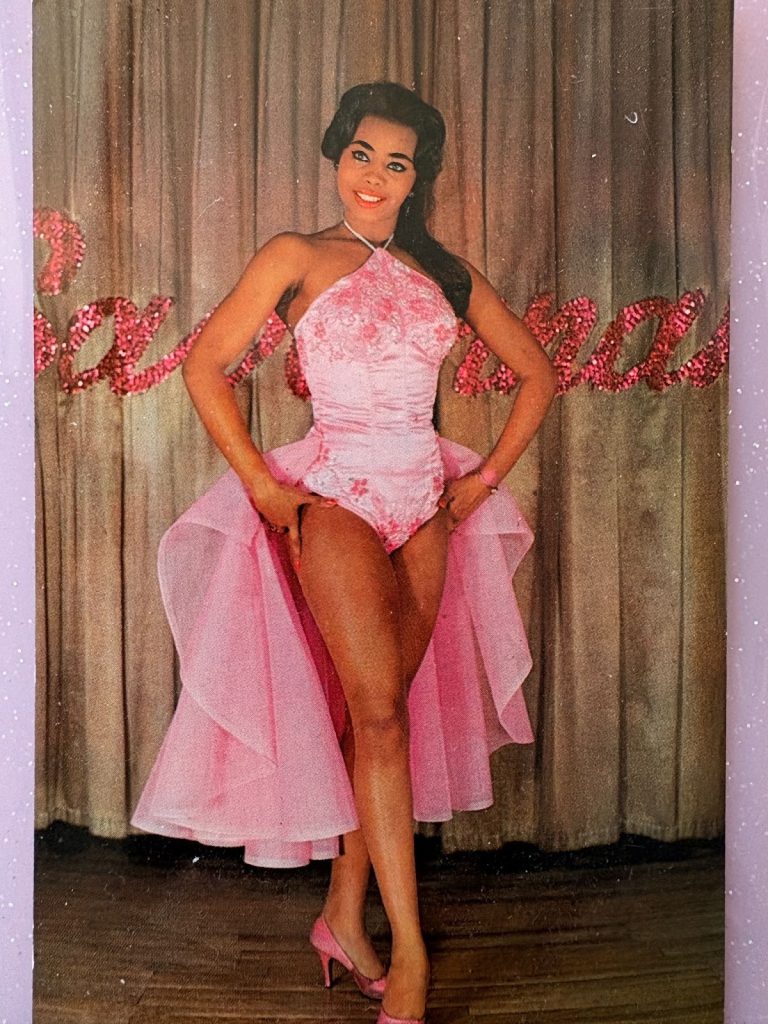
Recently, there’s been talk on social media about the idea of a burlesque ‘community’ versus an ‘industry’. Many performers argue that while we can bond and commiserate over a shared struggle, this doesn’t negate the fact that we have to compete for gigs, get paid on-time, and maintain a sense of professionalism both backstage and onstage. After all, Black burlesque performers have made great strides towards making sure we have equity, fair wages, and other standard employment protections; these are all important things that place burlesque squarely in the ‘job’ category. And the worst part of having a family is that families sometimes feud! In a traditional job setting, you can set emotions aside and fulfill your requested role – something that’s harder to do when a family feud is involved.
Throughout burlesque history, there have always been whispers of tokenism, favoritism, betrayal, undercutting, slacking, and all other kinds of bad business. Some performers have unfortunately been hurt the most by other performers who look like them. These negative aspects of burlesque have been around since the days of Lydia Thompson and the British Blondes – it’s no secret that it impacts modern Black burlesque performers as well.
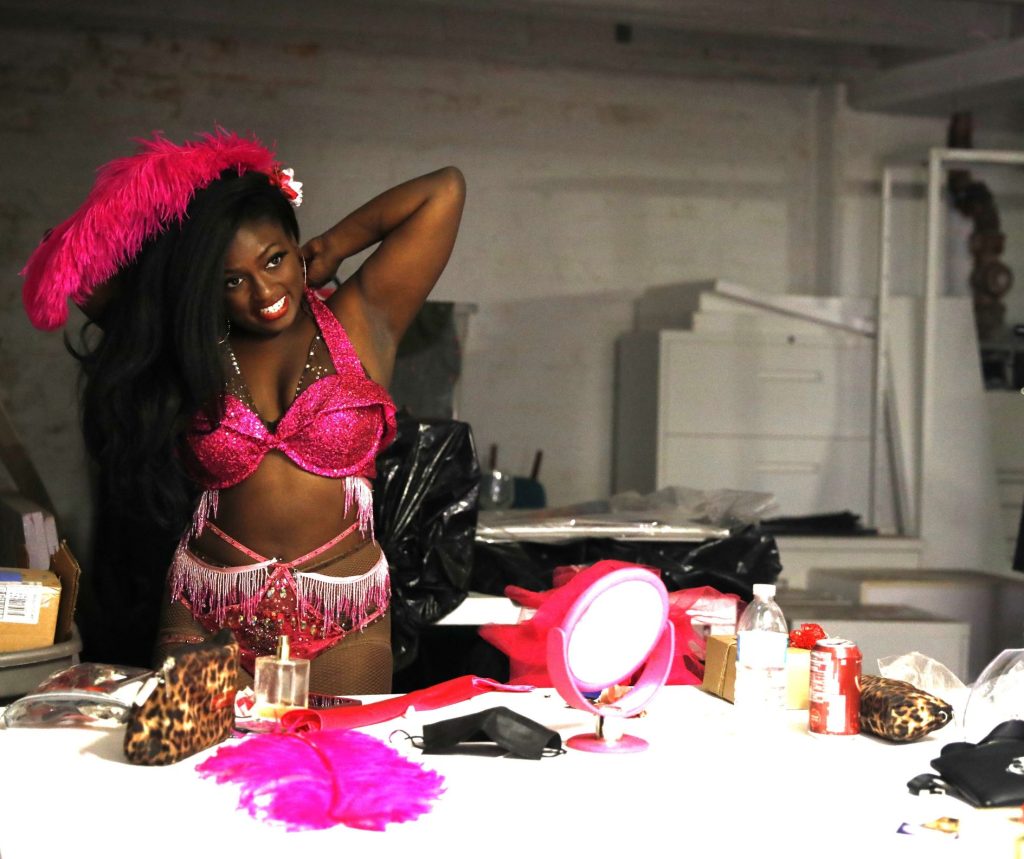
So how can we balance the delicate nature of belonging to a Black burlesque community and the stark reality that burlesque is, above all, a potentially profitable business and industry? How can we maintain our familial comfort with one another when much of the burlesque industry is shaped by class, social media followers, market demands, wealth, ability, and an audience gaze that sometimes profits off of femme insecurity? Do Black burlesque performers belong to this community whether we want to or not, like a birthright we must always operate in and fight for even when we long to be viewed more individually? Or is it aspirational to belong to this community, something newer Black performers and allies can work towards so that ‘belonging’ is not automatic but rather earned through learning burlesque history, fighting for equity, and more?
I have lots of questions, but I admittedly do not hold all the answers.
What I do know is that just by opening this dialogue, we are building more of that aspirational community that is not merely symbolic, but actually experienced. I believe we can model belonging to show others what it looks like in practice: teaching, collaboration, partnerships, and growth rather than competition. In my opinion, the heart of community is communication; sometimes we just need to sit and talk with one another!

I understand the complex challenges Black burlesque performers face when trying to build community within an industry. Even when we believe in the work we do, being a catalyst for change can be exhausting and labor-intensive. In addition, it’s draining when the relationships and ‘drama’ often outpace the change itself and burlesque politics are constantly shifting around you.
Perhaps I am naive, but I believe Black burlesque performers and any marginalized group within the burlesque industry can beat the odds and also be an active community that uplifts each other. When we are Black burlesque Legends sharing stories of our own yesteryear, I want our generation to be shaped not only by our struggles, but by revolutionary and intentional belonging in an industry that threatens to chew everyone up and spit them out. I want us to keep winning, and I don’t just mean with crowns – I mean succeeding in a way where we write our own history, we control our own narratives, and we gain the generational wealth needed to keep creating more burlesque tables for us to sit at for generations to come.
With thanks to Bebe Bardeaux for this piece specially commissioned for Black History Month 2026. Ed.